Template email
Buka Channel → Email → Templates.
Fungsi halaman ini
Desain tata letak email HTML dengan baris subjek, blok drag-and-drop, dan variables. Gunakan template dari Send → Send, kampanye, jadwal, atau Send API.
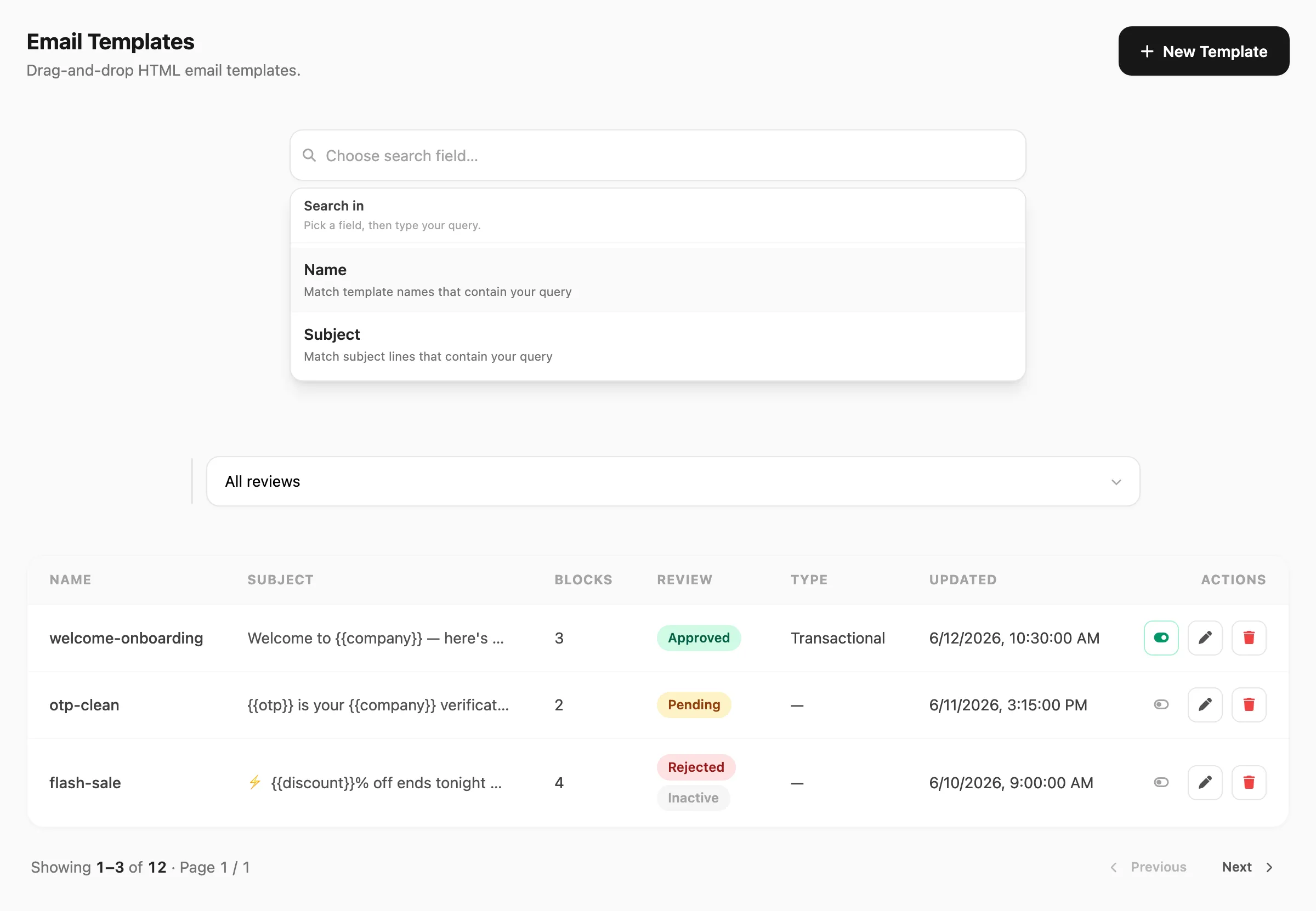
Data sampel ditampilkan.
| Kontrol header | Fungsi |
|---|---|
| New Template | Buka pemilih template, lalu editor blok |
| Back | Kembali ke daftar saat membuat atau mengedit |
Pencarian dan filter
Pencarian berbasis field — klik area pencarian terlebih dahulu, pilih kolom yang dicari, lalu ketik kueri Anda.
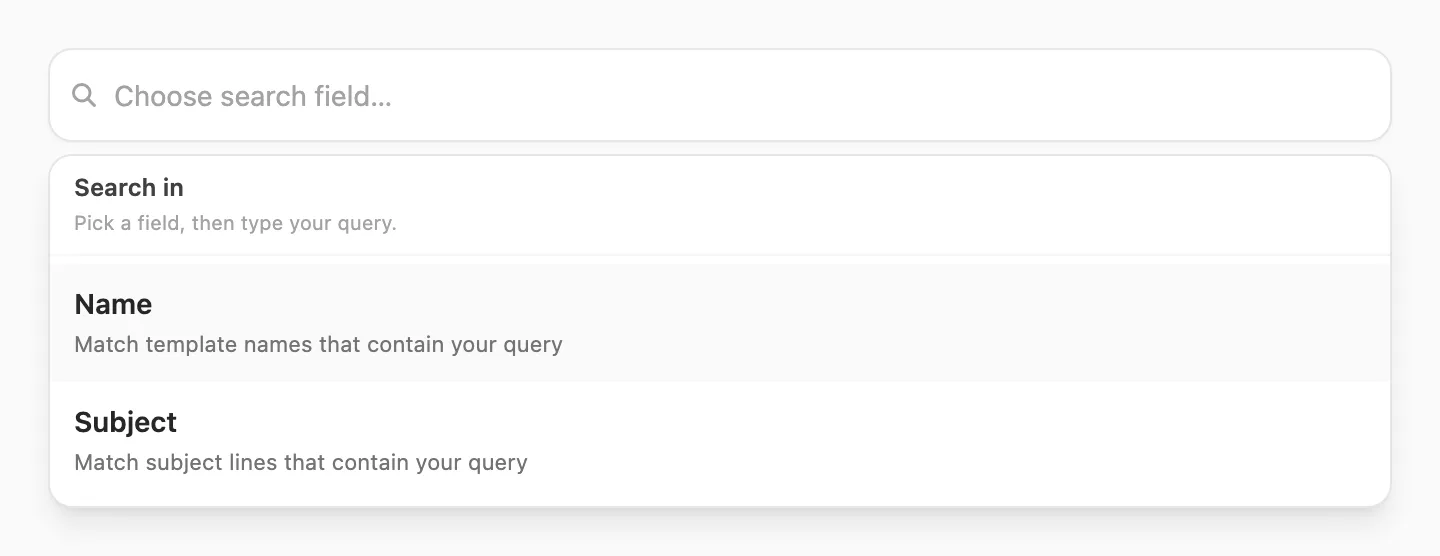
| Langkah | Yang terjadi |
|---|---|
| 1. Klik pencarian | Popup Search in terbuka — Anda harus memilih field sebelum mengetik |
| 2. Pilih field | Name atau Subject |
| 3. Ketik | Kirisan memfilter tabel saat Anda mengetik (debounce singkat) |
Setelah memilih field, bilah pencarian menampilkan nama field di kiri (misalnya Name ▼). Klik untuk mengganti field — mengganti field menghapus kueri.

| Field pencarian | Cocok dengan | Panjang minimum |
|---|---|---|
| Name | Nama template yang mengandung kueri Anda | 3 karakter |
| Subject | Baris subjek yang mengandung kueri Anda | 3 karakter |
Jika Anda mengetik kurang dari tiga karakter, Kirisan menunggu sampai minimum terpenuhi dan menampilkan petunjuk singkat di bawah bilah pencarian.
Pada baris yang sama dengan pencarian (di kanan):
- Review — All reviews, Pending, Approved, atau Rejected
Paginasi di bawah tabel menampilkan total jika hasil lebih dari satu halaman.
Daftar template
Setiap baris adalah satu template tersimpan:
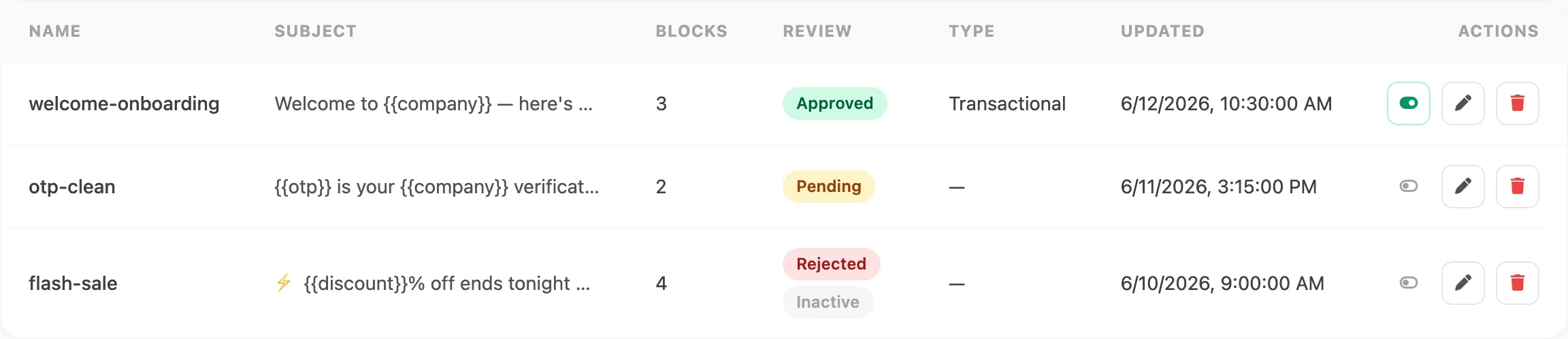
| Kolom | Arti |
|---|---|
| Name | Identifier yang Anda pilih (misalnya welcome-onboarding) |
| Subject | Baris subjek email (dapat berisi {{variables}}) |
| Blocks | Jumlah blok tata letak tingkat atas dalam template |
| Review | Pending, Approved, atau Rejected — klik badge untuk membuka Template review (lihat Status review). Inactive muncul saat template dimatikan dan tidak bisa diklik |
| Type | Ditetapkan setelah review: transactional (OTP, struk, notifikasi) atau marketing (promo, newsletter). — saat masih pending. Jenis ini menentukan cara Kirisan mengirim — lihat Transactional vs marketing di bawah |
| Updated | Kapan template terakhir disimpan |
| Actions | Nyalakan/matikan, edit, atau hapus — lihat Aksi baris |
Aksi baris
Tombol ikon ada di ujung setiap baris:
| Action | Fungsi | |
|---|---|---|
| Active toggle | Mengaktifkan atau menonaktifkan template Approved. Nonaktif sampai review lulus — baris pending dan rejected tidak bisa diaktifkan. | |
| Edit | Membuka editor blok untuk template tersebut. | |
| Delete | Meminta konfirmasi, lalu menghapus template. |
Saat template mati, toggle menampilkan merah (Inactive). Template approved yang aktif menampilkan hijau.
Buat template
- Klik New Template (atau Create your first template saat daftar kosong).
- Pilih tata letak starter atau Blank — lihat Pilih template awal.
- Masukkan Template name, atur Active jika ingin diaktifkan setelah approval, dan edit baris Subject di toolbar editor.
- Susun blok di editor visual dan atur variables.
- Klik Create Template. Kirisan meninjau konten; tombol menampilkan Reviewing… saat berjalan.
- Setelah approved, pilih template saat mengirim email.
Pilih template awal
Pemilih menampilkan tata letak email siap pakai dikelompokkan per kategori:
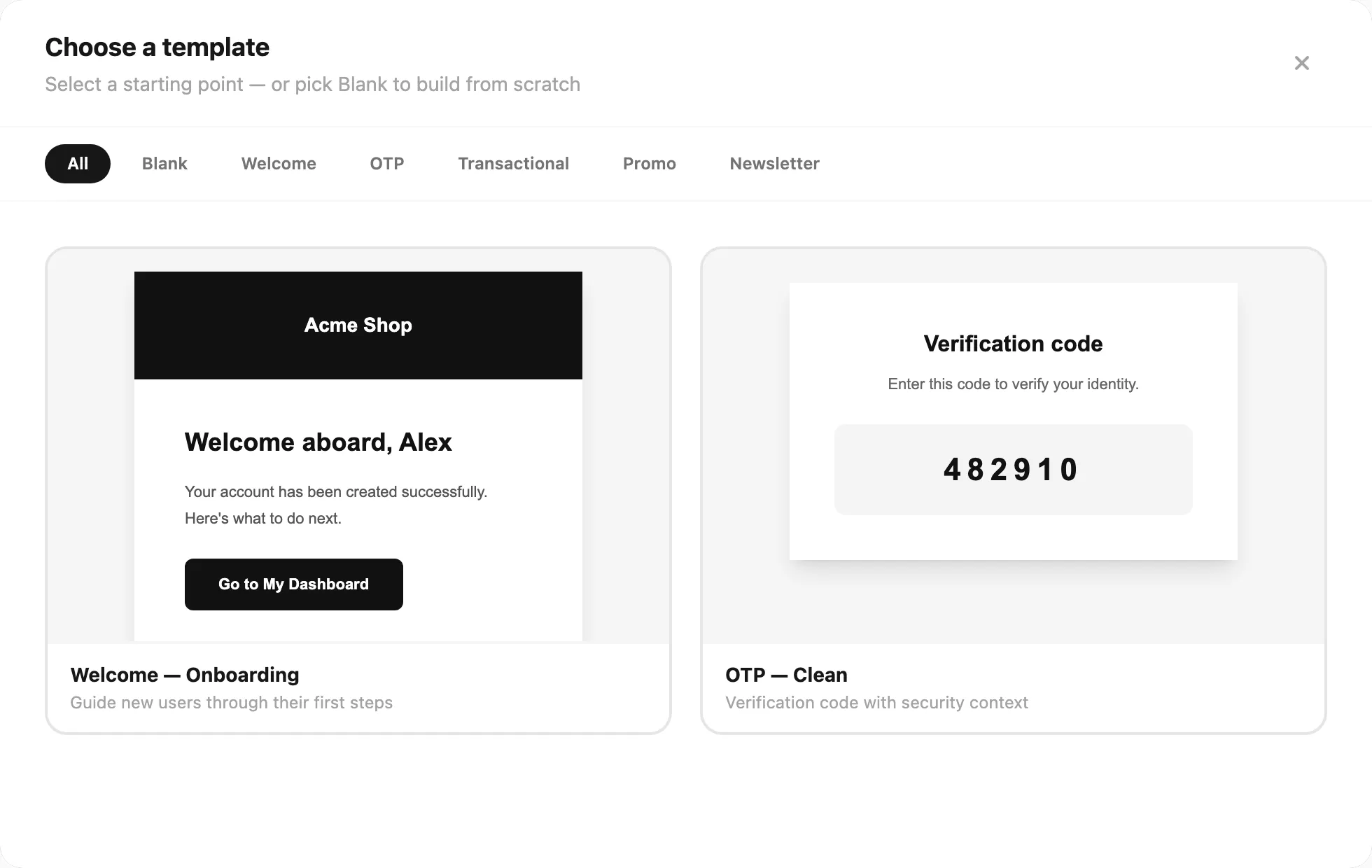
- Category tabs — filter Welcome, OTP, Transactional, Promo, Newsletter, dan lainnya, atau tetap di All
- Cards — masing-masing menampilkan pratinjau email langsung; klik satu untuk memuat ke editor
- Blank — kanvas kosong agar Anda bisa membangun dari awal
- Close () — kembali ke daftar tanpa membuat
Nama dan status aktif
Di bagian atas formulir buat/edit:
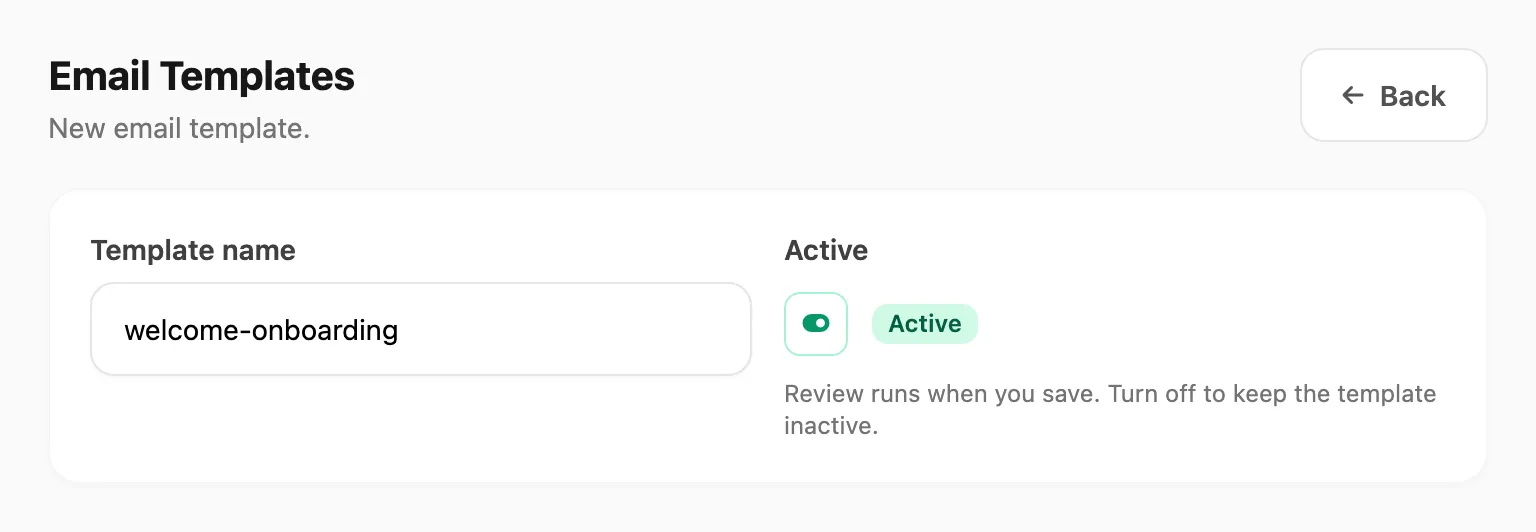
| Field | Arti |
|---|---|
| Template name | Nama pendek gaya id (misalnya order-confirmation) |
| Active | Toggle nyalakan untuk mengaktifkan template setelah review lulus; mati menyimpannya sebagai inactive. Toggle hijau = Active; merah = Inactive. Template pending dan rejected tidak bisa dinyalakan dari daftar. |
Pada template baru, Kirisan menjalankan review saat Anda menyimpan. Jika template Rejected, buka Template review dari daftar (lihat Status review) — edit konten dan simpan lagi untuk mengirim ulang.
Saat mengedit, Anda bisa Copy from saved template untuk memuat blok dan subjek dari template lain yang sudah Anda miliki.
Editor blok
Editor memiliki tiga panel: blocks di kiri, email canvas di tengah, dan properties di kanan saat blok dipilih:
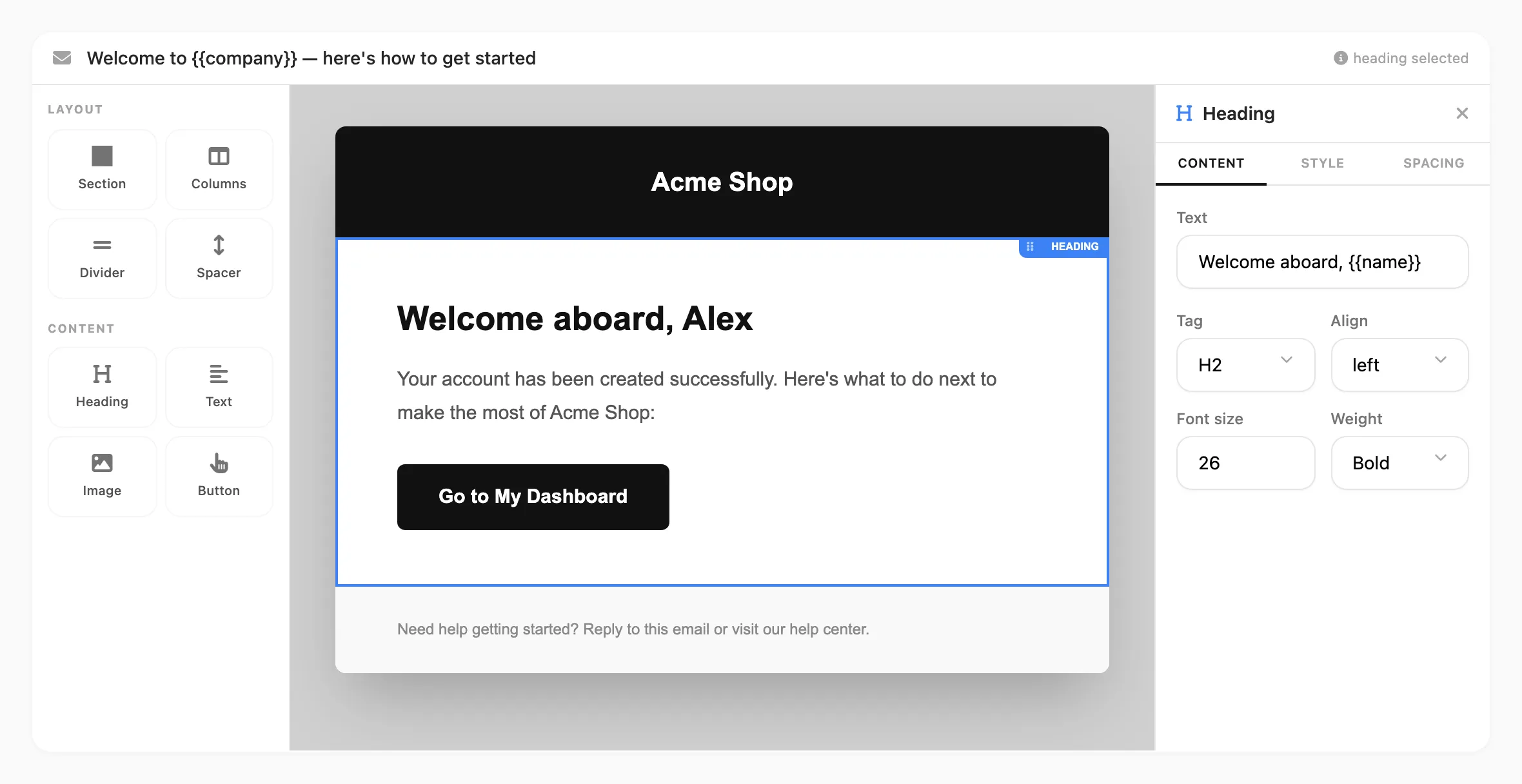
Baris subjek
Di bagian atas editor, klik field subjek dan ketik subjek email Anda. Gunakan placeholder {{variable}} sama seperti di konten blok.
Palet blok
Seret blok ke kanvas atau klik untuk menambahkan:
| Grup | Blok | Fungsi |
|---|---|---|
| Layout | Section, Columns, Divider, Spacer | Menyusun email — blok konten berada di dalam Section |
| Content | Heading, Text, Image, Button | Isi pesan, gambar, dan tautan call-to-action |
Klik blok di kanvas untuk memilih. Toolbar mengambang dipakai untuk mengurutkan ulang, menduplikasi, atau menghapus. Edit teks inline di kanvas; gunakan panel kanan untuk tab Content, Style, dan Spacing.
Blok gambar
Untuk blok Image, tempel URL atau gunakan tautan dari Resources → Files. Atur alt text, lebar, alignment, dan tautan klik opsional.
Blok tombol
Blok Button mendukung teks label, URL (termasuk {{variables}}), warna, border radius, dan lebar (Auto, Full, atau % lebar email).
Variables
Di bawah editor, panel Variables mencantumkan placeholder yang terdeteksi dari subjek dan blok Anda:
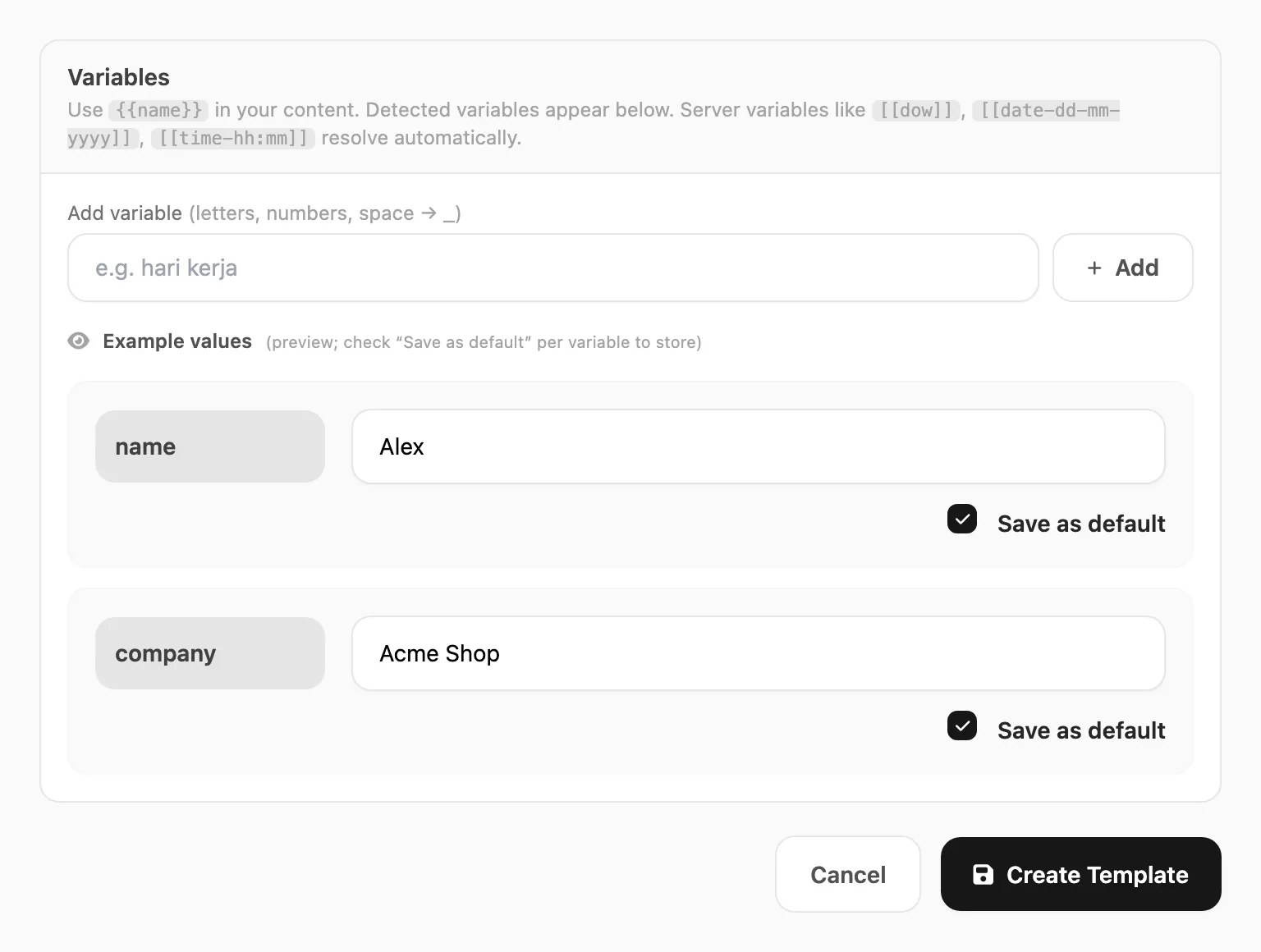
Kirisan mendukung tiga gaya placeholder. Dapat dicampur dalam satu template:
| Gaya | Contoh | Asalnya |
|---|---|---|
| Per-send / per-recipient | {{name}}, {{order_id}} | Didefinisikan di template ini — gunakan Add variable atau ketik {{name}} di subjek atau blok. Isi Example values untuk pratinjau kanvas; centang Save as default untuk menyimpan default hanya di template ini. Saat kirim, Send → Send atau Send API dapat menimpa dengan nilai spesifik penerima. |
| Built-in server | [[date-dd-mm-yyyy]], [[time-hh:mm]], [[dow]] | Diselesaikan otomatis saat kirim. Lihat Resources → Variables → Time. |
| Account custom | [[u-support_email]], [[u-promo_url]] | Didefinisikan sekali di Resources → Variables → Custom. Hanya variabel custom active yang disubstitusi. |
Contoh subjek yang mencampur gaya:
Hi {{name}} — your order ships [[date-dd-mm-yyyy]]{{…}} dan [[…]] tidak pernah bentrok — Anda bisa menggunakan keduanya dengan aman dalam template yang sama.
Status review
Klik badge Pending, Approved, atau Rejected mana pun di kolom Review untuk membuka Template review:
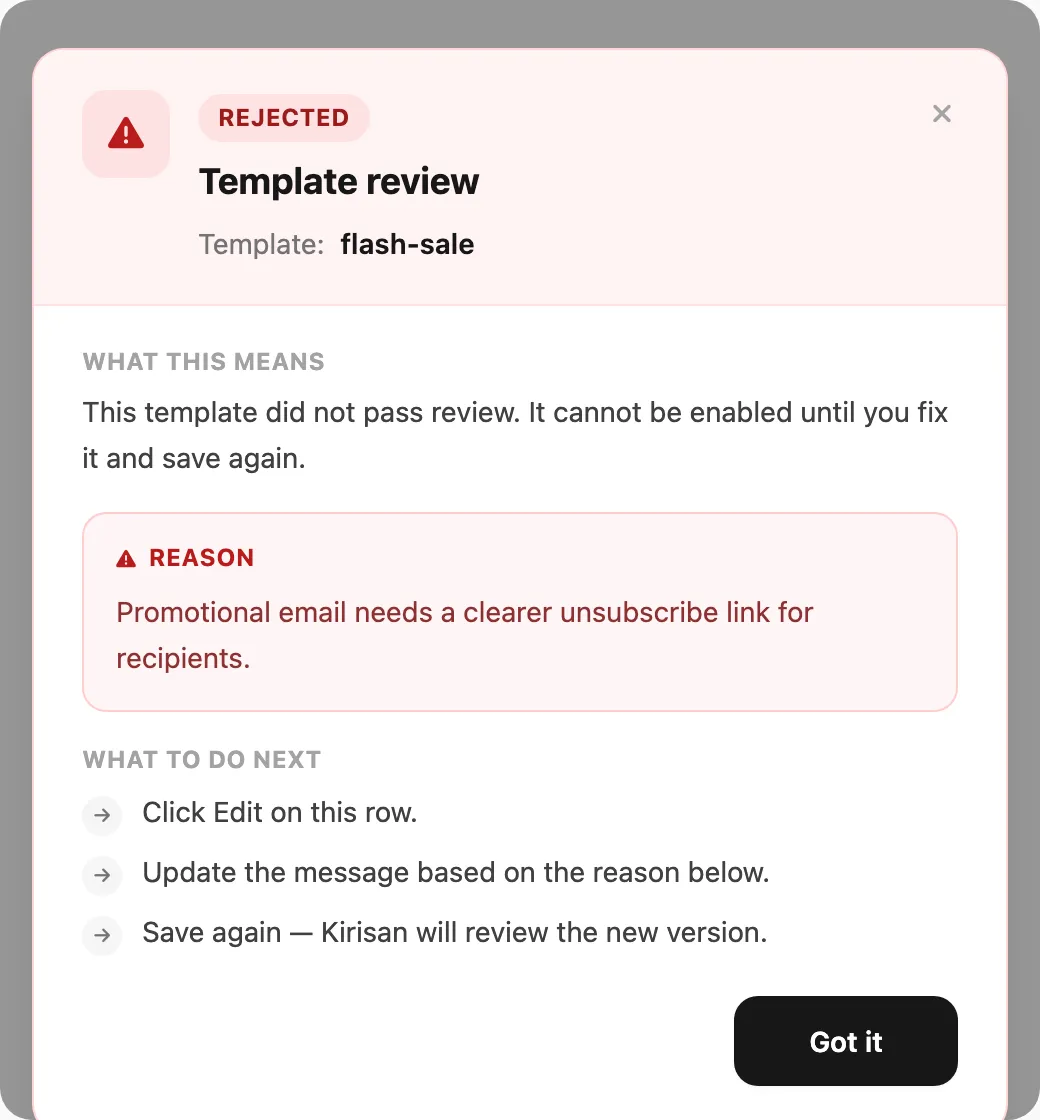
Sampel menampilkan template rejected.
Popup mencakup:
| Bagian | Yang Anda lihat |
|---|---|
| Header | Badge status, nama template, dan tutup () |
| What this means | Ringkasan bahasa sederhana untuk status saat ini |
| Reason | Alasan penolakan lengkap (hanya template rejected) |
| What to do next | Langkah tindakan — edit dan simpan lagi, nyalakan toggle, atau tunggu review |
| Got it | Menutup popup |
| Status | Ringkasan |
|---|---|
| Pending | Kirisan sedang meninjau setelah simpan terakhir — periksa kembali sampai status menjadi Approved |
| Approved | Lulus review — nyalakan toggle dan gunakan template dalam pengiriman (kategori ditampilkan jika ditetapkan) |
| Rejected | Tidak lulus — baca alasan, klik Edit, perbaiki konten, dan simpan untuk mengirim ulang |
Menyimpan tanpa mengubah konten template melewati review baru. Ubah subjek, blok, atau variabel untuk memicu pemeriksaan lagi.
Badge Inactive di samping badge review berarti template dimatikan — tidak bisa diklik.
Hapus template
Klik pada baris:
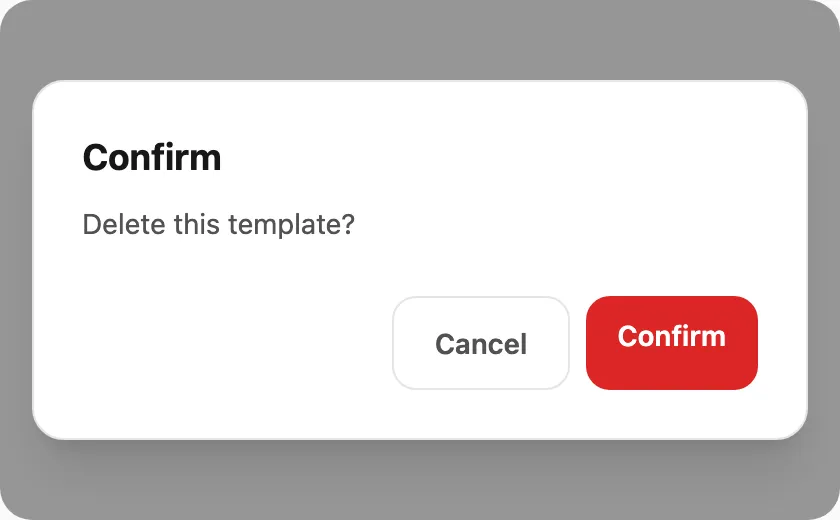
Konfirmasi untuk menghapus template (Confirm dialog — klik Confirm atau Cancel).
Transactional vs marketing
Anda tidak memilih Type saat membuat template. Setelah review lulus, Kirisan mengisi kolom itu.
| Type | Dipakai untuk | Cara kirim |
|---|---|---|
| transactional | OTP, konfirmasi pesanan, reset password, pemberitahuan akun | Kirisan mengirim segera. Boleh ke alamat baru. |
| marketing | Promo, newsletter, pengumuman | Dari Send → Send dan kampanye: Kirisan mengirim. Dari Send API: diterima dulu (queued), lalu dikirim berurutan. Hanya ke alamat yang sudah pernah menerima email dari domain ini. |
Email tanpa template (tulis subject dan isi di API) adalah jenis ketiga — raw. Itu tidak memakai baris di halaman ini. Lihat Send API.
Jika Sending health di Channel → Email → Domains menampilkan Blocked dengan label marketing, template transactional di domain yang sama masih bisa jalan (dan sebaliknya).
Tempat template digunakan
- Send → Send — pilih template saat menulis email
- Campaigns and schedules — gunakan kembali template approved dalam pengiriman massal
- Send API — kirim dengan id template dari integrasi Anda, atau kirim tanpa template (raw)
Hanya template Approved dan Active tersedia di tempat Kirisan memfilter berdasarkan status.
Terkait
- Domains — verifikasi domain pengiriman sebelum mengirim
- Emails — buat alamat pengirim pada domain terverifikasi
- Send messages — kirim email menggunakan template tersimpan
- Files — gambar di-host untuk blok gambar
- Variables — placeholder built-in dan custom
[[u-…]]